
23Jan

Job interviews are something we all go through, for better or for worse. Whether you’re looking for your first job or your next gig as a seasoned professional, preparing for an interview is crucial.

According to Career Sidekick data, an average online job posting receives around 250 applications, but only 2-3% of those applicants are called in for an interview. If you’re part of that small percentage, pat yourself on the back. You’ve made it through the first barrier. Now it’s time to put your best foot forward for the interview.

Here’s your guide for answering tricky questions like a pro. A job interview is about more than sharing your work history and skills.

What is my biggest weakness?

Film director and content creator Erin McGoff says the key to answering any job interview question is to think about what your interviewer is trying to get from the answer.

With over two million followers awaiting her next video, McGoff began making TikToks to level the playing field for career advice, which she says is often elitist because people who need it the most don’t have access to it.

When it comes to answering your biggest weakness, McGoff advises against stating a “quasi-weakness” like being a perfectionist.

“They don’t actually care, or expect you to say your greatest weakness,” McGoff told USA TODAY. “They want to hear you talk about your faults, because it says a lot about your character.”

She recommends sharing a real weakness that might not affect your ability to do the job. If you’re applying to be an EMT, for example, you don’t want to say you don’t work well under pressure.

“The key to answering that question: You spend about 10% of it explaining the weakness and 90% of it explaining how you are working on weakness,” McGoff says. “So instead of saying, I’m bad at computers, you would say: ‘Something that I’m currently working on is my Excel skill, I’m actually taking an online course right now. It’s helping me learn how to navigate Excel and operate the software more efficiently.’”


Common mistakes to avoid in a job interview

Talking too much about yourself

While you’re certainly the star of the interview, don’t forget to balance sharing your personal history with talking about the company itself. Share how your skills and experience make you the best candidate for the job.

“They’re interviewing a dozen ‘you’s,’” McGoff says. “They want to know what you can do for the company.”


Not reading the job description

It may seem obvious, but combing through the job description is essential when preparing for a job interview. Maybe there’s a tidbit about working with clients — something your customer service experience lends itself to. You might notice a detail about working with the company’s social media platforms. Now is a good time to mention you have a small following on TikTok.

“I think people go into the interview thinking, ‘How can I get this job?’ instead of thinking about ‘How can I be the solution to this company’s current problem of not having an employee for this position?’” McGoff says.


Letting intimidation take over

Remember the person on the other end of the conversation is also a human. Not only will it calm your nerves, but it’ll help you ace the interview. They’re a person with good days and bad ones, just like you. They’re a person who once applied for jobs and sat exactly where you are now.

At the end of the day, McGoff says, they want the interview to go well just as you do.

“They are advocating for the company, so that is important to keep in mind. They are not advocating for you necessarily,” McGoff says. “But they are praying that you are the perfect person for the role, because if you are then their job is done and they can go home early.”


This article originally appeared on USA TODAY: Common job interview questions: What to expect and how to answer.

21Jan

We spend more time working than any other activity, so if we’re in the wrong career, it can seriously impact our quality of life. While quiet quitting and rage applying are taking off and most people no longer want to overstretch themselves for a job, we also don’t want the hours we do spend working to be unhappy. If you’re stagnating professionally, it might be time to consider being your own boss or figuring out what the best career is for you.

“If you ask yourself, ‘should I stay or should I go?’ you are already in the exploration phase of a career change,” Kelsea Warren, founder of The Seamless Coach.


Assess your strengths

Take a skills assessment or speak with a career counselor to better understand your strengths and interests,” suggests Michael Samuel, founder of CEOMichaelHR. “This can help you identify potential career paths that align with your skills and passions.”

Use your imagination

“Imagine that you could pursue any career,” Dr. Manly suggests. “Journal about that career and what it looks like, on a pragmatic level, to pursue it.”

Be realistic

Shifting careers may take some planning. “If you determine that your ideal career is feasible, create a pro/con list about the career path to gain clarity on what the shift would entail,” Dr. Manly says.

Reach out

“Connect with individuals in the industries or job roles you are interested in,” Samuel suggests. “They can provide valuable insights and may be able to connect you with job opportunities.”

Set goals

Dr. Manly suggests setting one specific macro goal (“I want to shift in a career in graphic design by the end of this year”) and then supporting it with at least five specific micro goals, which might look like creating a new resume or taking a course.

Get support

If you can, obtain the support of your family and friends to encourage you to pursue your goals. “If you meet resistance along the way, it’s important to self-reflect, and you may want to obtain professional support such as psychotherapy to support your journey,” Dr. Manly recommends.

12Jan

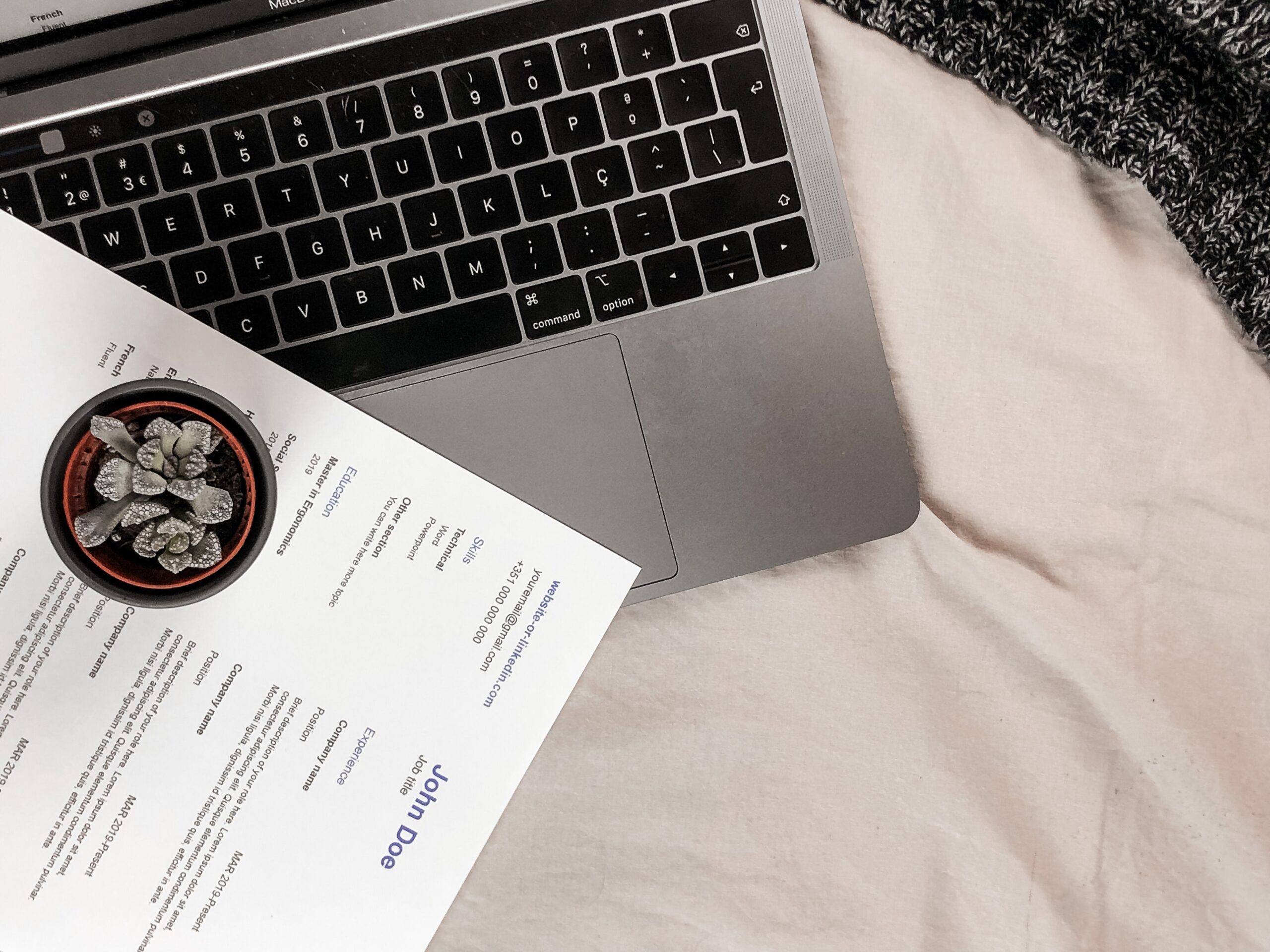
Have you ever wondered what recruiters and hiring managers look for when they read applicants’ CVs?

If you knew this, you would be able to make your application stand out from the hundreds of others they receive.

As a job seeker, it should be your priority to make your CV a cut above the rest, and here are seven ways to do just that:


Grab their attention

Make sure that, at first glance, a recruiter will know the most important things about you. You can do this by starting with a short list of your most impressive skills. Ensure the skills match the job you are applying for.

This will entice them to read more about your work experience, which you should list in chronological order.

Your layout should also be attractive, but not distracting. It should be clear and highlight your strong points. Recruiters have mixed views about whether you should use a photo.

However, they all agree: If you are going to use a photo in your CV, ensure that you look professional and not as though it was taken on a night out.


Be concise

According to the employment website Indeed, hiring managers, on average, only look at CVs for six to seven seconds. Therefore, it is crucial to condense the most important information into your CV.

The website also recommends that the average length of a CV be two to three pages, while other recruiters say it should be one page.


Do not be modest

This is your time to shine. You need to be candid about your achievements; for example, being voted as the team leader at your previous job, or winning an award at your university or TVET college.

This will provide the person looking at your CV with a clearer picture of what you are capable of and give them an idea of your dedication.


Show that you know the industry

You need to show that you are knowledgeable in the field that you are in, even if you are just entering the job market.

This will demonstrate that you keep up with whatever shifts and developments occur in your sector.

It will also show that you can be an asset to the organisation you’re applying to join.


Be careful of the language you use

Recruiters look for applicants who are truthful and unique. Therefore, stay away from clichéd attributes such as hard-working or responsible.

This may be true of your work ethic and character, but it is more beneficial to show rather than tell.

Instead, you can mention that you are accountable, ethical and conscientious.


Be accurate

The grammar, spelling and punctuation in your document could mean the difference between your CV getting tossed into the rubbish bin or getting a call for an interview.

It is important to pay attention to every detail. To ensure that your CV is free of errors, you can use free grammar checking apps such as Grammarly.

Before you submit your CV, have another pair of eyes go over it. They might notice something you missed.


Be honest

Under the National Qualifications Framework Amendment Act, it is illegal to lie about your qualifications on your CV.

While you may want to be impressive by embellishing your achievements, it is better to be genuine and upfront, as recruiters will often verify your information.

Being honest will prove that you could make a trustworthy employee.